


The militarization of space continues to gain momentum.
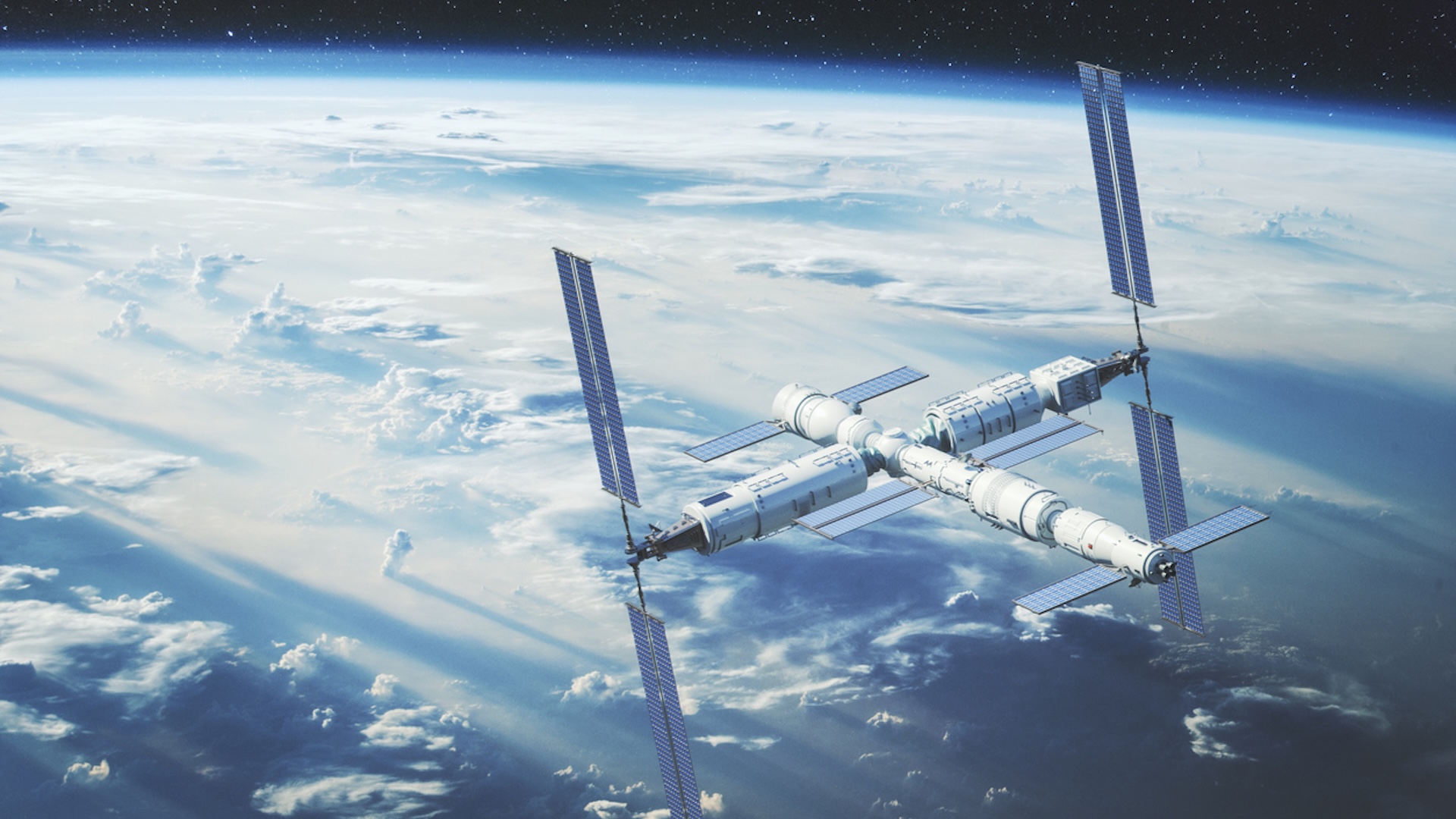
One of the world’s leading space powers, China, is developing a new robotic defense system for its Tiangong space station. The space system will utilize autonomous vehicles capable of intercepting and latching onto suspicious spacecraft. Once in their grasp, these bots would thrust away from the orbital station, removing the danger.
The new development was announced by Sun Zhibin of the National Space Science Centre in Beijing during a talk at Nanjing University of Science and Technology on Tuesday, a report from the South China Morning Post (SCMP) reveals.
China’s space defense bots
During his talk, Sun outlined key plans for China’s Tiangong space station. The orbital outpost, launched in 2021, is one of the key showcases of China’s space leadership.
In recent years, the nation has challenged the US’s space science and research dominance. Last year, Chinese astronauts performed a nine-hour spacewalk, breaking a record previously set by NASA astronauts aboard the International Space Station (ISS).
“Sometimes another spacecraft may deliberately come close – maybe just to take a look – but it can still interfere with our operations,” Sun explained during his public talk, according to the SCMP report.
“In such cases, we first try to assess their intent. Then we choose how to respond – whether by dodging, adjusting our orbit, or releasing a small robot to grab and redirect the object,” he continued.
The US Defence Advanced Research Projects Agency (DARPA) is developing a similar technology. Its robotic satellite inspection system could also be used to counter potential threats. Several startups, such as Astroscale, are also developing rendezvous and capture technologies. However, these are predominantly for space debris.
Starlink close calls
In December 2021, China filed a complaint to the United Nations, stating its Tiangong space station had to perform two evasive maneuvers due to SpaceX’s Starlink satellites.
According to the report filed with the UN, Starlink-1095 and Starlink-2305 lowered their orbital trajectories. This brought them within Tiangong’s operational zone of roughly 380km (236 miles). Tiangong was crewed during two near misses on July 1 and October 21.
The complaint to the UN stated that these events “constituted dangers to the life or health of astronauts aboard the China Space Station”.
It is understandable that nations will build technologies to protect their multi-billion-dollar space infrastructure. However, it is worth noting that military space missions go against the principles set out in the 1967 Outer Space Treaty – a foundational document for international space law.
Unfortunately, the world’s fractured political sphere is increasingly impacting space operations. One example comes in the form of the Trump administration’s proposed space budget, which would drastically cut NASA’s science spending – ultimately benefitting China. The ISS, once a beacon of global scientific collaboration, will also face cuts, and may be deorbited sooner than expected.
link