Idaho deploys satellite technology for wildfire detection
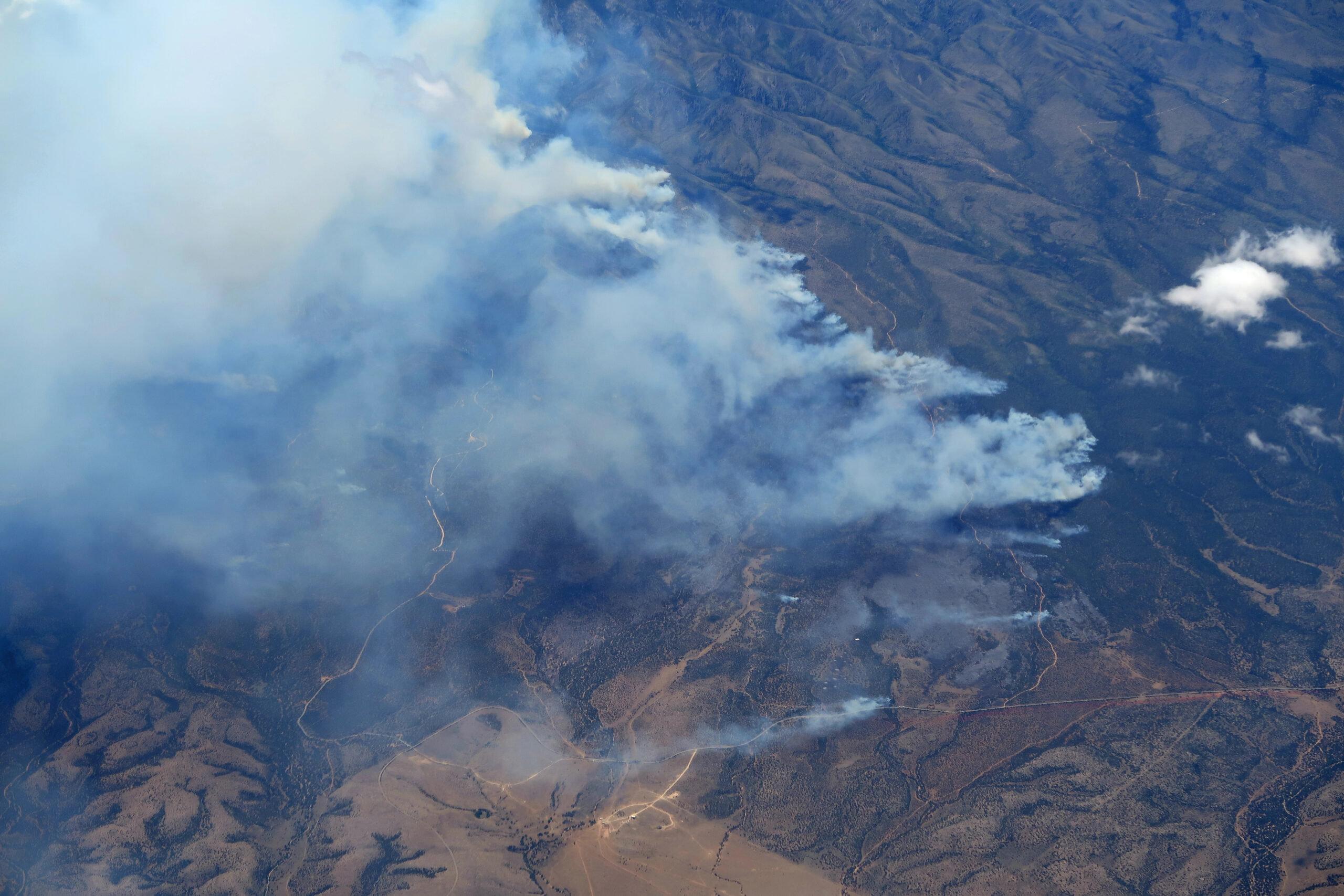
Whether employing the use of cameras, aircraft or lightning detection systems, no one single tactic or piece of technology can sufficiently serve as the sole resource for detecting and protecting wildfires in Idaho.
At a Glance:
- Idaho is first in the U.S. to use statewide satellite wildfire monitoring
- IDL partners with OroraTech in a $150,000 one-year demo
- Technology provides real-time fire detection and predictive analytics
- Goal: keep 95% of Idaho wildfires contained at 10 acres or less
Considering there are more than nine million acres of state, private and federal land to look after and monitor throughout the Gem State, staying ahead in the battle against such blazes is no easy task.
“We are continuously looking for innovative ways of rapidly detecting and reporting the start of a wildfire,” said Dustin Miller, director of the Idaho Department of Lands (IDL), whose agency, to date, has reportedly dealt with 360 fires statewide this year alone.
One of the ways to best utilize the most efficient resources fighting fires in Idaho now includes the integration of satellite technology.
In August of this year, the IDL officially entered into a one-year contractual agreement with OroraTech USA, a global wildfire intelligence firm that specializes in using satellites for wildfire management. At a cost of $150,000, the agreement allows IDL to demo the effectiveness of the firm’s firefighting products, designed to provide fire location, intensity and predicted spread.
Considered a 12-month demo or trial run, Idaho is now the “first in the nation to deploy a statewide satellite-based wildfire detection and monitoring system,” according to a recent press release provided by the company.

“Yes, in terms of statewide civil protection, Idaho is the first to deploy this technology statewide,” said Robert La Macchia, OroraTech’s director of accounts and growth. “We look at wildfire from space using satellites and view using satellite technology to help plug a gap in coverage and the communication phase of fighting fires.”
From preparedness, to response, recovery and mitigation, IDL’s fire suppression objective is to keep 95% of all fires in Idaho at 10 acres or less, a goal that led the agency to look skyward for more help in what has become an annual fight against what are becoming bigger, more severe and more costly fires.
“We are striving to meet that objective and a key component to a rapid response is notifying the appropriate resources,” Miller said.
Headquartered in Munich, Germany, and based out of Denver, Colorado, in the U.S., OroraTech began operating in 2018. Today, the company boasts more than 1,000 global users of its satellite technology. Since 2022, the firm has established the world’s largest satellite network dedicated to wildfire management.
Idaho’s statewide use of the technology is what separates it from other OroraTech customers.
“Others are using it in the utility sector, some county fire departments, some forestry,” said La Macchia. “Where we have seen a lot of success globally we are now bringing that to places like Idaho.”
Collaboration, or combining an assortment of resources as opposed to elements operating independently has become commonplace in what has become an annual exercise known as “wildfire season.”
And the addition or adoption of the use of “space” in fighting fires has become a bigger factor the past three years.
“We’re seeing more customers with an interest of having eyes in the sky because it can monitor at all times,” he said. “There are no restrictions by day or night, or smoke or cloud cover. It’s been a big push for those in this industry.”
In a statement provided for a separate article IBR published earlier this year focused on wildfires, Miller shared that his agency, for both this year and 2026, has partnered with Fire Neural Network to conduct a two-year demo of an advanced lightning detection system. Additionally, the IDO has relied on eight fire detection cameras and, within the past year, made a budget request to add 15 more.
“When you can marry some of these technologies like cameras or lightning data, you can collaborate and work together to get the best results,” La Macchia said. “The state is using us specifically right now for some of our predictive analytics and our detection and monitoring capabilities.”

Time will tell whether the IDL’s new partnership or trial run using OroraTech’s satellite technology will help improve the state’s abilities to protect both its residents and land from wildfires.
“We are comparing notification data from our current mountain top camera detection system, reporting times of fire reports to dispatch, and other online publicly available resources so that we can make a determination as to the effectiveness of OroraTech’s products,” Miller said.
On the ground, Idaho’s diverse and rugged terrain may cause difficulties for those fighting fires. But from the sky, it’s a whole different approach.
“What we provide, it is actually easier for us to monitor from 300 miles above using lower orbit satellites,” La Macchia said. “But from the sky, terrain does not really matter. It all looks pretty similar.”
Essentially, in the world of satellite monitoring, the more diverse the topography, the better the application is from space.
“When you are talking about fires in mountainous areas, it is tough for cameras, tough for those fighting the fire on the ground,” he said. “It’s tough for planes to get there. But space is a great asset for that because we are always flying over. Think about it, people can’t just easily see into canyons. But satellites above are always looking at them. So, the more tricky it is to monitor, the better it is from space.”
With up to 35 satellites making 30 to 35 “overpasses” a day in Idaho, fires the size of a typical automobile can be spotted with real-time data provided in a matter of seconds.
As stated in their press release, “OroraTech’s Wildfire Solution platform draws on data from the company’s public and wildfire satellites as well as other public sources, creating unmatched situational awareness for firefighting agencies.”
“Our Platform is divided into three phases — past, present and future — and what IDL is using our platform for today is the present and the future,” La Macchia said. “In Idaho we’re concerned about what I call the “glo-cal” approach, a global problem with a local challenge we are trying to solve.”
Determining fire intensity or radiative power, he said, is one of many analytics provided by satellite monitoring. “This way you can send your suppression vehicles or aircraft to an exact area where you need to go to dampen that heat source or where a fire is burning the hottest.”
Plus, predictive analytics or modeling for factors such as wind speed, direction, as well as topography, allow those fighting fires on the ground to see how a fire may run over the period of anywhere from six to 24 hours.
“There is never a time when we are not available to be in the air,” La Macchia said. “We can provide this information in a matter of seconds to show how a fire can spread. A lot of our customers use our platform specifically for this type of information.

“This is where satellite data fits into this whole picture. You get a location, get some data behind it, understand what’s to come, and it becomes a really valuable tool.”
And for La Macchia, whose background includes previous work with the Canadian Space Agency prior to joining OroraTech three years ago, satellite technology, like most all other technological elements, continues to advance and improve.
“When you’re building tools for 2025 you need to be building them for 2030 because you are already behind if you’re building them for today,” he said. “This goes back to what we have seen the past few years with fires in the west, whether it be cameras, drones, planes, the effectiveness of all these elements.”
Thus, fighting wildfires, even from above, comes down to collaboration and keeping all tactics and resources working together rather than separately.
“The beauty of space is there is a global approach to it,” he said. “The same satellite that will see or cover Idaho can see into the other side of the world, too.”
In the meantime, IDL will spend the next year or fire season evaluating whether OroraTech’s satellite technology can become a fixed and integral part of state’s yearly battle with wildfires.
“All of our fire districts and fire management personnel have access to this product and we are currently soliciting feedback from those users,” Miller said. “We won’t have much information in regard to the effectiveness of their product versus the products that we are also using and have not made any determination at this time what the future looks like. Our intent is to have a compilation of the data completed later this winter.”
link