Turkish firm Fergani launches new satellite
By Alimat Aliyeva
Türkiye’s Fergani Space Technologies, founded by Selçuk
Bayraktar, chairman and chief technology officer of the Turkish
defense company Baykar, has successfully launched its second
domestically developed satellite, FGN-100-D2, marking another
significant milestone in the company’s growing satellite
constellation project, Azernews reports, citing
foreign media.
According to a statement released by Baykar, the FGN-100-D2
satellite was launched on Saturday from Cape Canaveral’s Space
Launch Complex 40 (SLC-40) in the United States aboard SpaceX’s
Bandwagon-4 mission. Weighing 104 kilograms, it is Türkiye’s
largest private-sector satellite to date.
Roughly 74 minutes after liftoff, the satellite separated from
the launch vehicle and successfully entered its designated orbit,
transmitting its first telemetry data back to Earth, officially
marking the start of its operations.
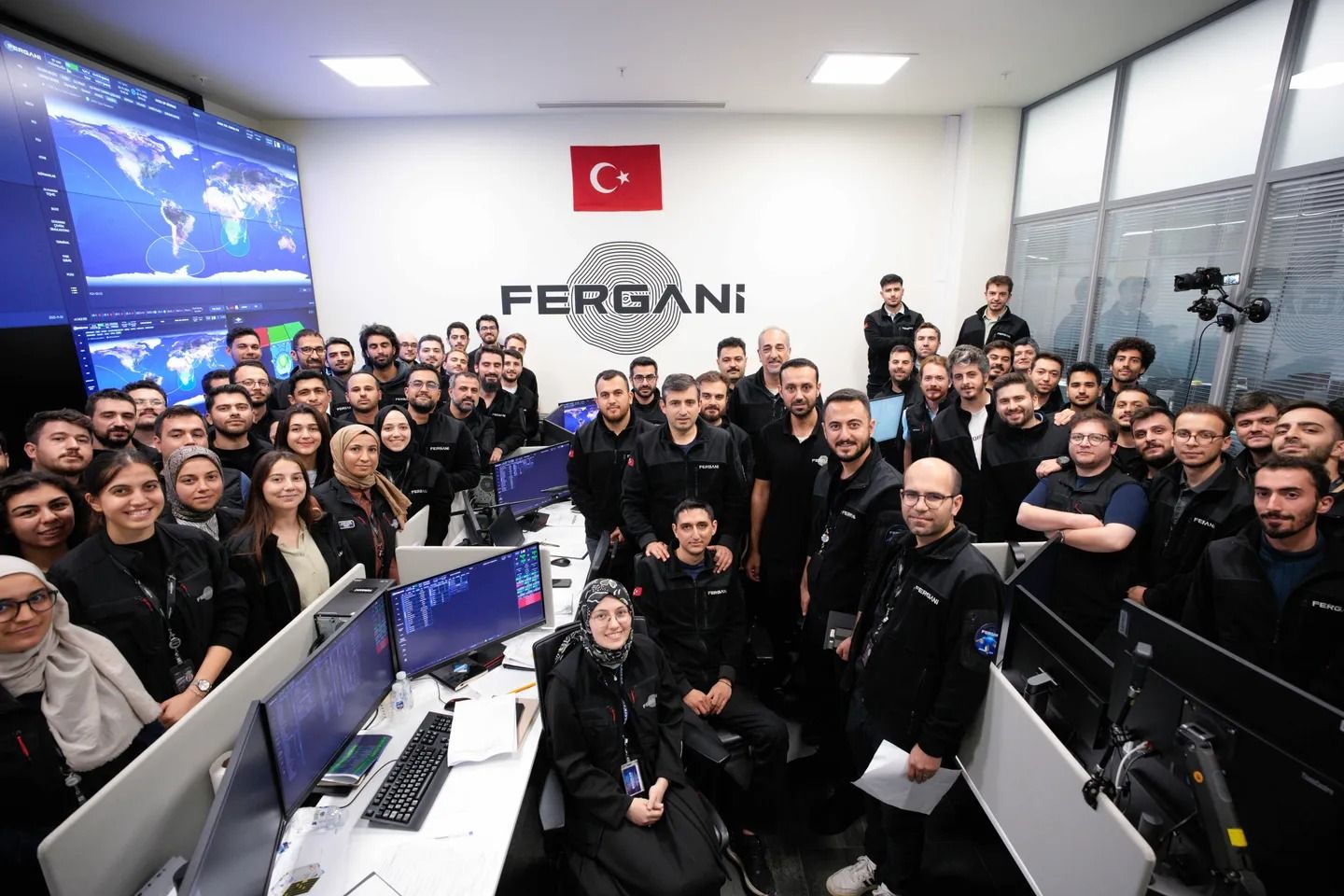
The launch was monitored in real time by Selçuk Bayraktar and
his engineering team from the Space Observation and Control Center
at the Özdemir Bayraktar National Technology Center in
Istanbul.
This achievement follows the successful launch of Fergani
Space’s first satellite, the 102-kilogram FGN-100-D1, on January
14, 2025, from Vandenberg Space Force Base in California as part of
SpaceX’s Transporter-12 mission. That satellite also reached orbit
successfully and began transmitting telemetry approximately 62
minutes after liftoff.
Bayraktar emphasized that the deployment of FGN-100-D2 marks an
important step toward the creation of the Uluğ Bey Global
Positioning System — a 100-kilogram-class test satellite platform
developed entirely with national engineering and domestic
resources.
Founded in 2022, Fergani Space employs 135 engineers and
technicians and is rapidly becoming a cornerstone of Türkiye’s
growing space industry ecosystem. Bayraktar noted that all
engineering, systems design, and software integration for the
satellites were performed in-house, and each satellite is expected
to have an operational lifespan of five to seven years.
“Our goal is to deploy more than 100 satellites within five
years and to provide an independent, domestically developed Uluğ
Bey Global Positioning System to Türkiye and all friendly and
allied nations,” Bayraktar stated.
He also revealed that the company is developing an orbital
transfer vehicle, which will soon undergo test flights alongside a
small satellite. In addition, Fergani engineers are working on a
fully independent launch vehicle, paving the way for Türkiye’s
sovereign access to space in the coming decade.
Operating at an altitude of approximately 510 kilometers in low
Earth orbit, the FGN-100-D2 travels at a speed of 7.6 kilometers
per second, completing about 15 orbits around the Earth per
day.
Developed entirely using domestic technologies, the satellite
incorporates national avionics systems, locally integrated
software, a green propulsion system, and advanced structural
design. It will test a range of capabilities, including on-orbit
operations, telemetry and telecommand communications, positioning
accuracy, and payload data transmission, further advancing
Türkiye’s ambitions in space technology and satellite autonomy.
Industry analysts describe Fergani’s rapid progress as a symbol
of Türkiye’s determination to establish itself as a regional space
power, following in the footsteps of its growing defense and drone
industries, which have already drawn international attention.
link